
Toyota signs commercial deal for Agility’s Digit
PLUS: US brains for Chinese bots, Viral robot soldiers debunked

Welcome back to your Robot Briefing
Toyota Manufacturing Canada is deploying Agility Robotics' Digit humanoid robots under a commercial contract at its Woodstock assembly plant, moving beyond pilot programs to production-scale automation. The automaker secured seven units under a Robots-as-a-Service model that eliminates upfront capital costs.
This marks a turning point: when one of the world's largest manufacturers commits commercially, the humanoid robotics market shifts from experimental to operational. Are you ready to evaluate whether your most repetitive processes justify deployment in the next planning cycle, or will you wait until competitors already have robots on the floor?
In today's Robot update:
Toyota Hires 'Digit' for Factory Work
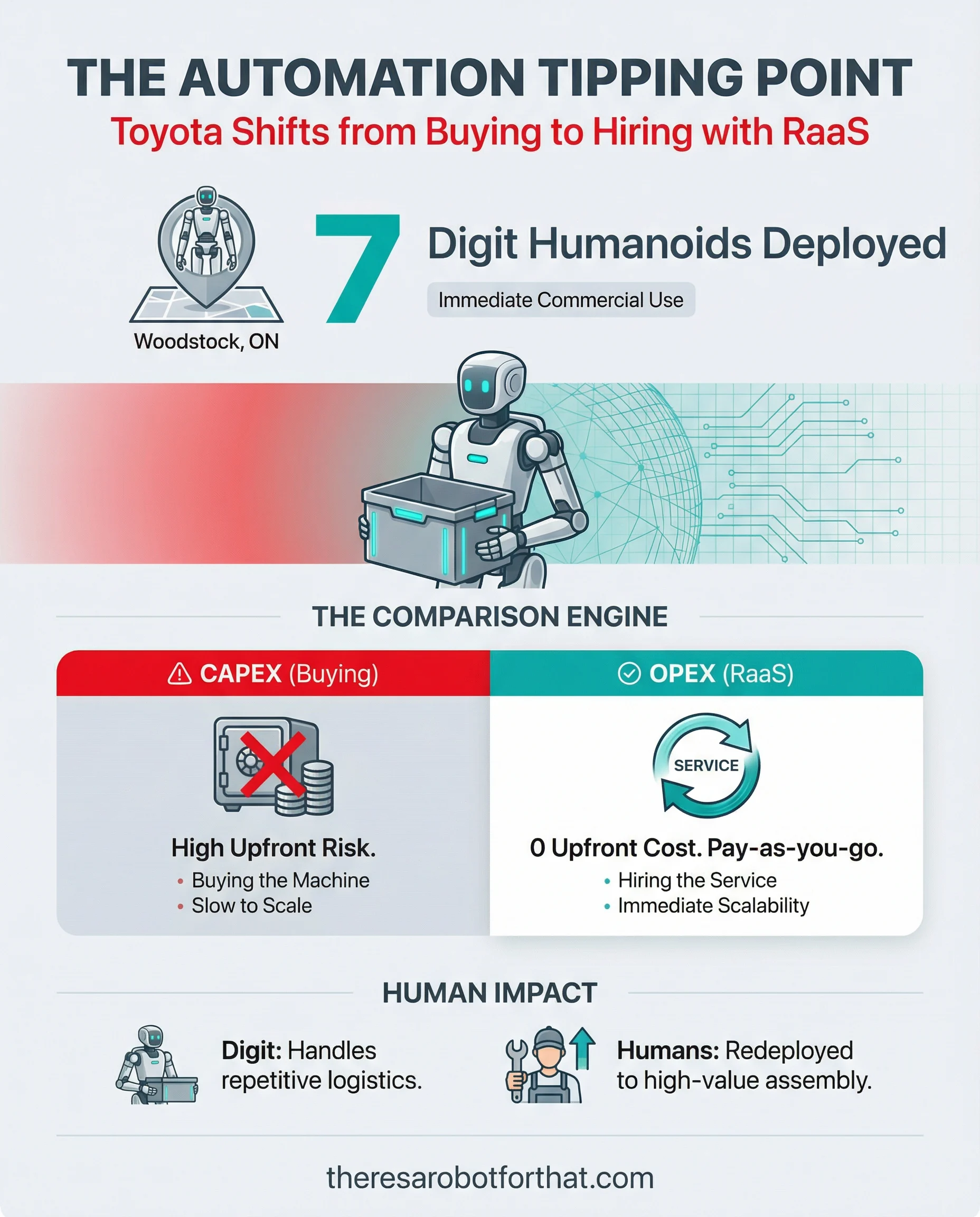
Image Source: There's A Robot For That
Snapshot: Toyota Manufacturing Canada signed a commercial agreement with Agility Robotics to deploy humanoid robots at its Woodstock assembly plant, marking a shift from pilot programs to production-scale deployment at one of the world's largest automakers.
Breakdown:
Takeaway: When Toyota moves from pilot to commercial contract, that's your signal to start evaluating humanoid robots seriously—not for 2028, but for planning cycles happening right now. The RaaS model means the barrier isn't capital budget anymore; it's whether you have processes repetitive enough to justify the deployment.
US Startup Builds 'Brains' for Chinese Humanoids
Snapshot: OpenMind is positioning its OM1 operating system as the bridge for Chinese hardware makers like Unitree and AgiBot to enter Western markets. By pairing Chinese robot bodies with US-hosted software and data compliance, they aim to bypass regulatory hurdles and accelerate global adoption.
Breakdown:
Takeaway: This represents a potential fast-track for Chinese humanoid robots into Western markets through regulatory arbitrage rather than hardware innovation alone. Companies evaluating automation partners should watch whether this software-layer compliance strategy actually works or faces pushback from regulators who may view it as circumventing the spirit of supply chain security rules.
Fact Check: Viral 'Robot Soldier' Videos Are AI Fakes
Snapshot: Viral clips appearing to show Unitree robots executing military shooting drills have been debunked as AI-generated content, not real demonstrations of Chinese military robotics capability.
Breakdown:
Takeaway: AI-generated misinformation can create false signals about competitive threats in robotics, making verification essential before strategic decisions. The real story here isn't Chinese robot soldiers—it's that distinguishing authentic robotics capabilities from AI fakes now requires the same scrutiny as evaluating any other business intelligence.
Figure Robots Demonstrate 24/7 All-Weather Autonomy
Snapshot: Figure CEO Brett Adcock shared footage of the company's humanoid robots operating autonomously outdoors in rain and sunshine, signaling that the hardware is being hardened for real-world conditions beyond controlled lab environments.
Breakdown:
Takeaway: This update signals that humanoid robotics is transitioning from the "does it work?" phase to the "can it survive real conditions?" phase that procurement teams actually care about. Companies evaluating humanoid automation should watch for Figure's next milestone: extended pilot deployments with paying customers in uncontrolled environments.
Other Top Robot Stories
Physical Intelligence clarified it is not designing a full humanoid robot, dismissing industry speculation and signaling the company's focus remains on software and AI control systems rather than hardware manufacturing—a strategic positioning that could reshape partnership dynamics as hardware makers seek best-in-class AI solutions.
NVIDIA convenes leaders from ABB, Agile Robots, SK Hynix, and Siemens at GTC 2026 to discuss AI-driven transformation of manufacturing facilities, reflecting how industrial automation is shifting from isolated robotics projects to integrated ecosystems where simulation and AI coordination across suppliers becomes the competitive advantage.
🤖 Your robotics thought for today:
Toyota moved from pilot to seven-unit deployment with pay-per-use pricing.
If capital budget isn't the barrier anymore, why are manufacturers treating humanoid evaluation as a 2026 problem instead of a Q1 decision?
What am I missing?
Until tomorrow,
Uli


