
Robotera’s L7 humanoid masters precision sword fighting
PLUS: Figure reveals 7th-gen hand, Siemens CEO tests factory humanoids
Welcome back to your Robot Briefing
A Beijing-based robotics startup just demonstrated its humanoid executing sword fighting routines with aerial flips and rapid directional changes—the kind of whole-body coordination that directly translates to industrial manipulation work.
Robotera isn't a household name yet, but if relatively unknown Chinese players can now showcase this level of dynamic control, how quickly is the technical gap closing between Eastern and Western humanoid developers? For companies evaluating vendor readiness, the competitive landscape may be shifting faster than procurement cycles can track.
In today's Robot update:
Robotera's L7 humanoid masters sword fighting
Snapshot: Beijing-based Robotera released footage of its L7 humanoid robot performing complex sword fighting routines to celebrate Lunar New Year, demonstrating the kind of full-body coordination and dynamic balance that translates directly to commercial manipulation tasks.
Breakdown:
Takeaway: Marketing stunts aside, this demo signals that Chinese humanoid developers are rapidly closing the gap on whole-body dexterity and dynamic control. For companies evaluating humanoid readiness, the fact that a relatively unknown player can demonstrate this level of coordination suggests the technology is maturing faster than most procurement timelines assume.
Figure reveals 7th-gen humanoid hand
Snapshot: Figure CEO Brett Adcock unveiled the company's 7th-generation humanoid hand, featuring capabilities that push closer to human-level dexterity in manipulation tasks.
Breakdown:
Takeaway: The iteration velocity on hands specifically tells you manipulation technology is maturing faster than full humanoid platforms, which narrows the gap to practical factory deployment. Companies evaluating humanoid pilots should watch for manipulation benchmarks in vendor demos, not just walking and navigation capabilities.
Siemens CEO tests humanoid navigation in factory
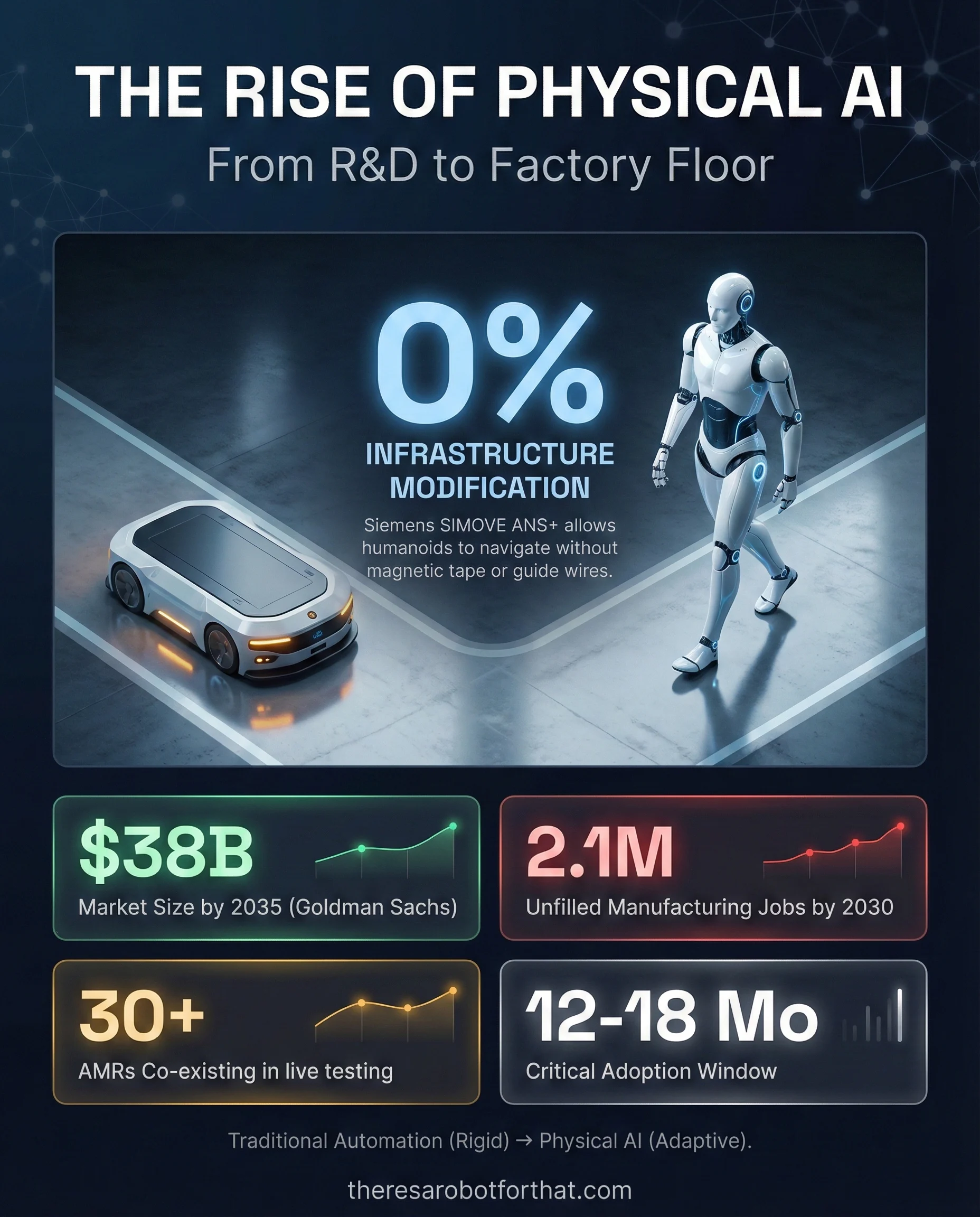
Image Source: There's A Robot For That
Snapshot: When the CEO of Siemens personally tests a humanoid robot navigating his company's factory floor, it's no longer a research project—it's a deployment signal that industrial automation leaders are preparing for humanoid integration at scale.
Breakdown:
Takeaway: When CEOs of industrial automation companies stop delegating humanoid testing to R&D teams and start walking factory floors themselves, the timeline for mainstream deployment accelerates. Companies that manufacture in constrained environments where flexible automation delivers competitive advantage should begin evaluating how autonomous navigation fits their facility layouts within the next 12-18 months.
Realbotix pivots from adult dolls to service bots
Snapshot: Realbotix, formerly known for adult companion products, has rebranded to target hotels, casinos, and retail stores with AI-powered humanoid concierges starting at $10,000 for base models.
Breakdown:
Takeaway: This pivot signals that humanoid robotics expertise developed in niche markets is now reaching mainstream business applications at accessible price points. Companies in hospitality and retail should watch whether Realbotix can deliver on its ROI promises, as it could accelerate adoption timelines across customer-facing industries.
Other Top Robot Stories
Unitree deployed its UnifoLM-X1-0 embodied AI model to manufacture robots inside its own factory, demonstrating that Chinese robotics companies are moving from selling hardware platforms to developing proprietary AI that can handle real production tasks without human supervision.
Anthropic confirmed CEO Dario Amodei's view that robotics will become a trillion-dollar industry, citing breakthroughs in continual learning and generalization as the key unlocks—though he expects another 1-2 years before these models diffuse through the economy at scale.
AGIBOT scheduled its embodied robots launch event for February 24, 2026 in Munich, partnering with Minth Group to unveil industrial automation systems targeting European manufacturers—signaling that Chinese humanoid makers are establishing beachheads in Western markets with concrete deployment timelines.
GITAI operates its S2 robotic system on the International Space Station for in-orbit servicing tasks, using dual end effectors to perform operational work in the space environment—proving that autonomous manipulation can function reliably in the most extreme conditions where human oversight is impossible.
🤖 Your robotics thought for today:
A Beijing startup demonstrates sword-wielding robots with aerial flips to prove manipulation capability while established players cautiously validate pick-and-place tasks in controlled environments.
The question isn't which approach is more impressive—it's which one closes enterprise sales cycles faster when procurement teams see the demos.
What's your take?
Until tomorrow,
Uli


