
NVIDIA, Disney, DeepMind release 'Newton' physics engine
PLUS: China's surgical robot rally, Ericsson hires humanoids, Restoring the surgeon's touch
Welcome back to your Robot Briefing
Three tech giants just joined forces on a problem that's kept robots stuck in warehouses: NVIDIA, Disney Research, and Google DeepMind built Newton, an open-source physics engine that trains robots to walk through sand, gravel, and other unpredictable terrain that causes expensive failures in real deployments. Disney already used it to get their BDX Droid moving through shifting surfaces, and now any company can access the same simulation tools.
The question for businesses evaluating automation: does this infrastructure breakthrough finally make outdoor robots viable for construction sites and farms, or are we still years away from reliable deployment?
In today's Robot update:
NVIDIA, Disney & DeepMind drop 'Newton' physics engine
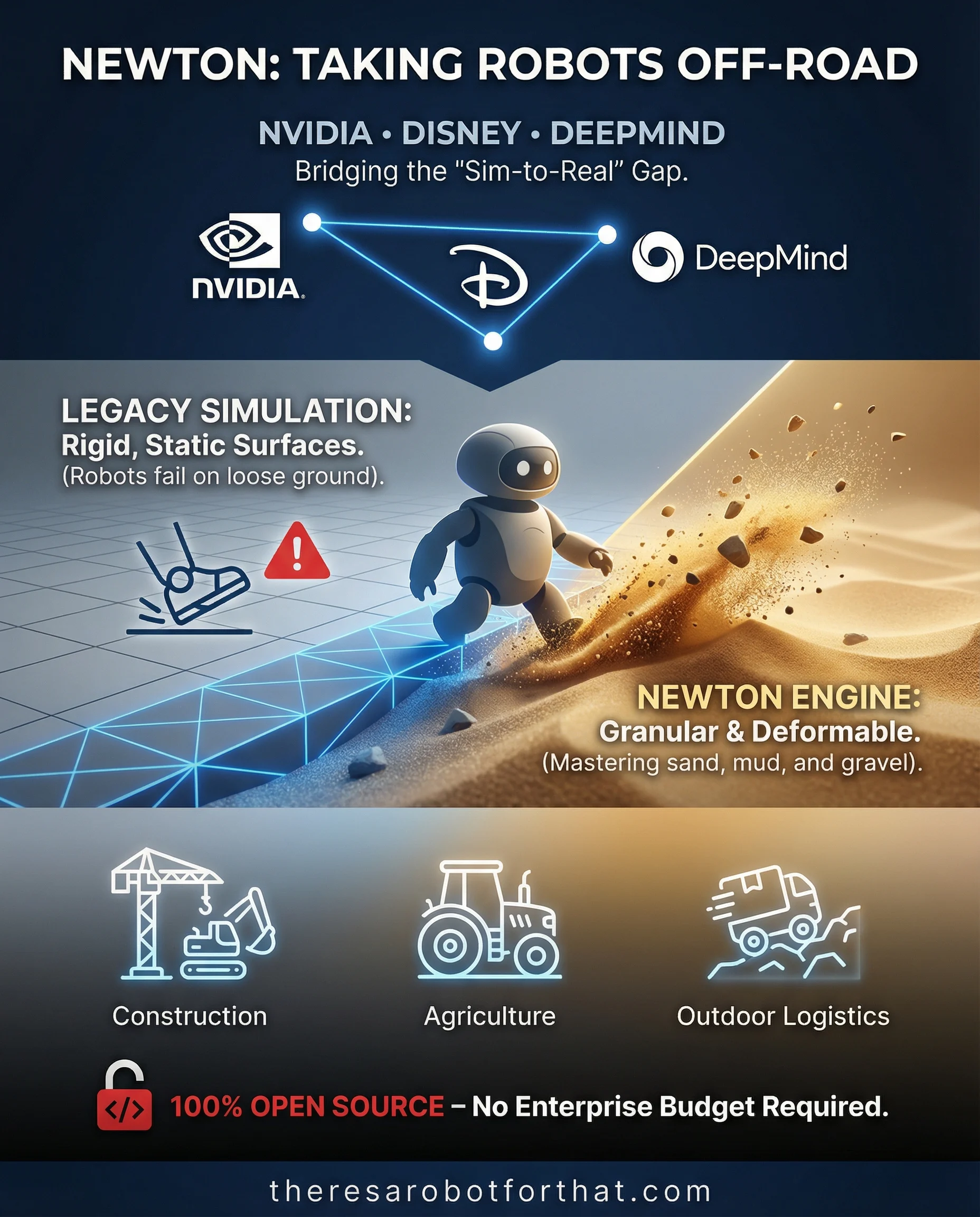
Image Source: Gemini / There's A Robot For That
Snapshot: NVIDIA, Disney Research, and Google DeepMind released Newton, an open-source physics simulation engine that teaches robots to navigate unpredictable terrain like sand and gravel — addressing one of the biggest barriers to deploying robots outside controlled factory floors.
Breakdown:
Takeaway: This moves the industry closer to robots that can handle unpredictable environments without constant human intervention, which directly impacts when automation becomes viable for industries like construction, agriculture, and outdoor logistics. The fact that it's open-source means smaller companies can now access simulation capabilities that previously required massive R&D budgets.
China's new pricing playbook sparks surgical robot rally
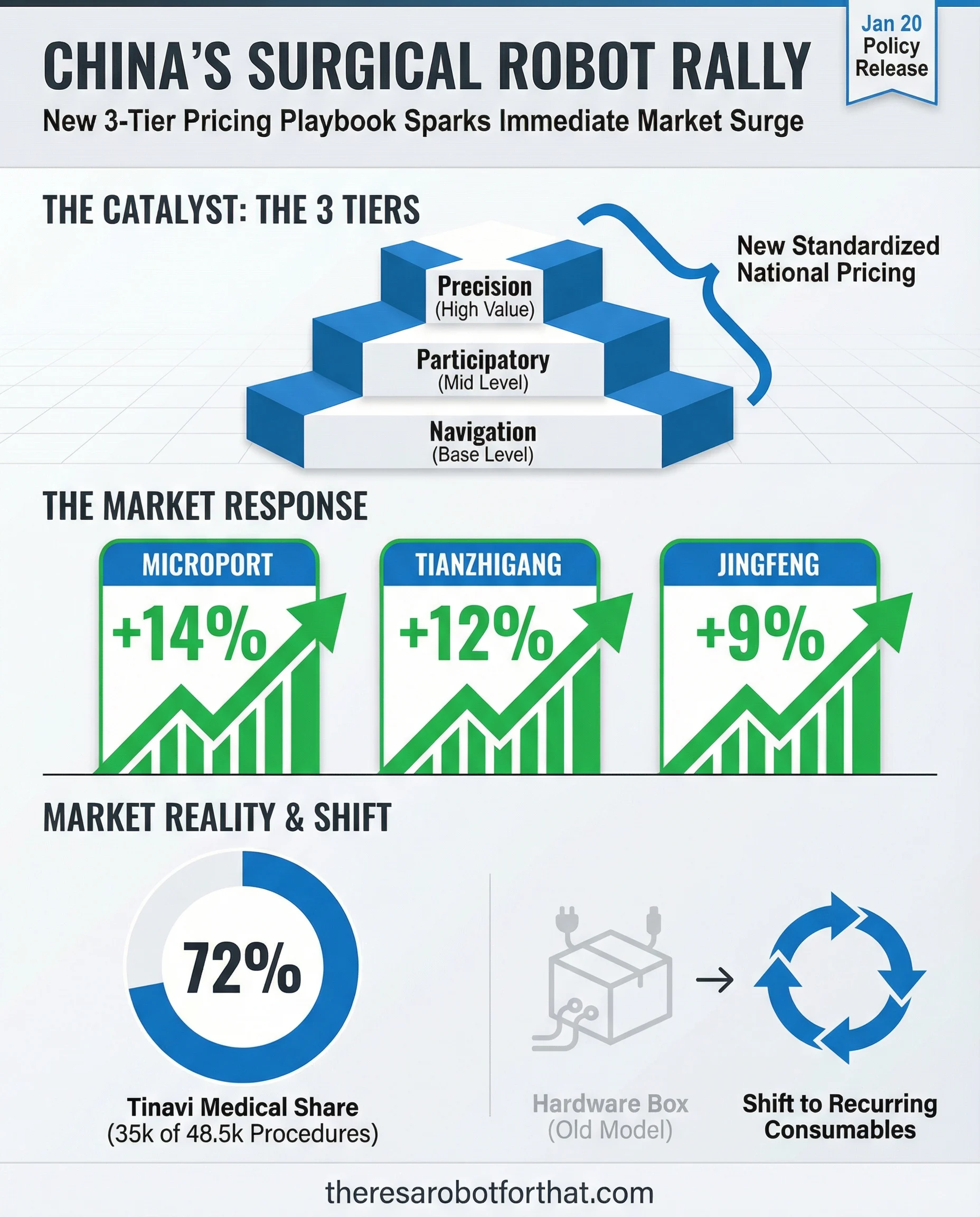
Image Source: Gemini / There's A Robot For That
Snapshot: China's National Healthcare Security Administration released the country's first national pricing guidelines for robotic surgery on January 20, establishing a three-tier fee structure that sent surgical robot stocks soaring by double digits.
Breakdown:
Takeaway: This marks China's surgical robotics market moving from experimental to mainstream, solving the pricing uncertainty that kept hospitals cautious about procurement. The framework's focus on clinical value over hardware costs signals that regulators are ready to scale adoption, making this a template other markets may follow as they grapple with similar commercialization challenges.
Ericsson hires humanoids for its Texas experience center
Snapshot: Telecommunications giant Ericsson is deploying Realbotix humanoid robots at its Imagine Studio in Plano, Texas, to handle workforce training and visitor engagement. This marks one of the first public deployments of humanoid robots by a major enterprise for operational functions beyond manufacturing floors.
Breakdown:
Takeaway: Major telecoms don't typically adopt unproven technology for customer-facing environments, making this a credible signal that humanoid robots are ready for enterprise deployment in controlled settings like experience centers and training facilities. Companies evaluating visitor engagement or workforce development tools should watch how this deployment performs over the next 6-12 months as a practical test case.
Restoring the surgeon's touch with soft robotics
Snapshot: European researchers are building soft robotic "fingertips" that could give surgeons their sense of touch back during minimally invasive and robotic operations, with the first prototype expected by March 2026.
Breakdown:
Takeaway: This matters because robotic surgery continues to expand in operating rooms, but surgeons currently operate with significantly reduced sensory information compared to traditional open surgery. The near-term timeline and credible research consortium suggest tactile feedback solutions could become standard features in surgical robotics within the next few years, not a distant possibility.
Other Top Robot Stories
XPeng completed its first ET1 humanoid robot unit built to automotive-grade production standards, with CEO He Xiaopeng confirming the milestone as a critical step toward mass production of advanced humanoid robots by the end of 2026—signaling that major EV manufacturers are transitioning humanoid development from prototypes to production-ready systems.
UBTECH deployed its Walker S2 humanoid at SANY RE's 5G-enabled wind power smart factory in China, marking the first humanoid robotic worker in the renewable energy manufacturing sector where the robot handles precision sorting and adaptive manipulation tasks in a fully operational production environment.
🤖 Your robotics thought for today:
NVIDIA, Disney, and DeepMind just open-sourced Newton so any startup can train robots on sand and gravel without a massive R&D budget—so why are construction and agriculture companies still waiting for "proven solutions" instead of spinning up their own pilots this quarter?
Until tomorrow,
Uli


