
Surgeon performs cancer surgery from 5,000km away
PLUS: Medtronic and CMR break Intuitive’s US monopoly, Surgerii raises $100M, CES 2026 preview
Happy New Year and welcome back to your Robot Briefing
Remote surgical robotics just crossed a critical threshold: a physician in Shanghai successfully operated on two cancer patients in Mumbai, 5,000 kilometers away, using commercially approved equipment with regulatory clearance. This wasn't a lab demonstration—it was actual patient care with outcomes matching traditional robotic surgery.
The bigger question for healthcare systems: does remote specialist deployment finally solve the geography problem of scarce surgical expertise, or do latency and liability concerns still require boots on the ground?
In today's Robot update:
Surgeon performs cancer ops from 5,000km away
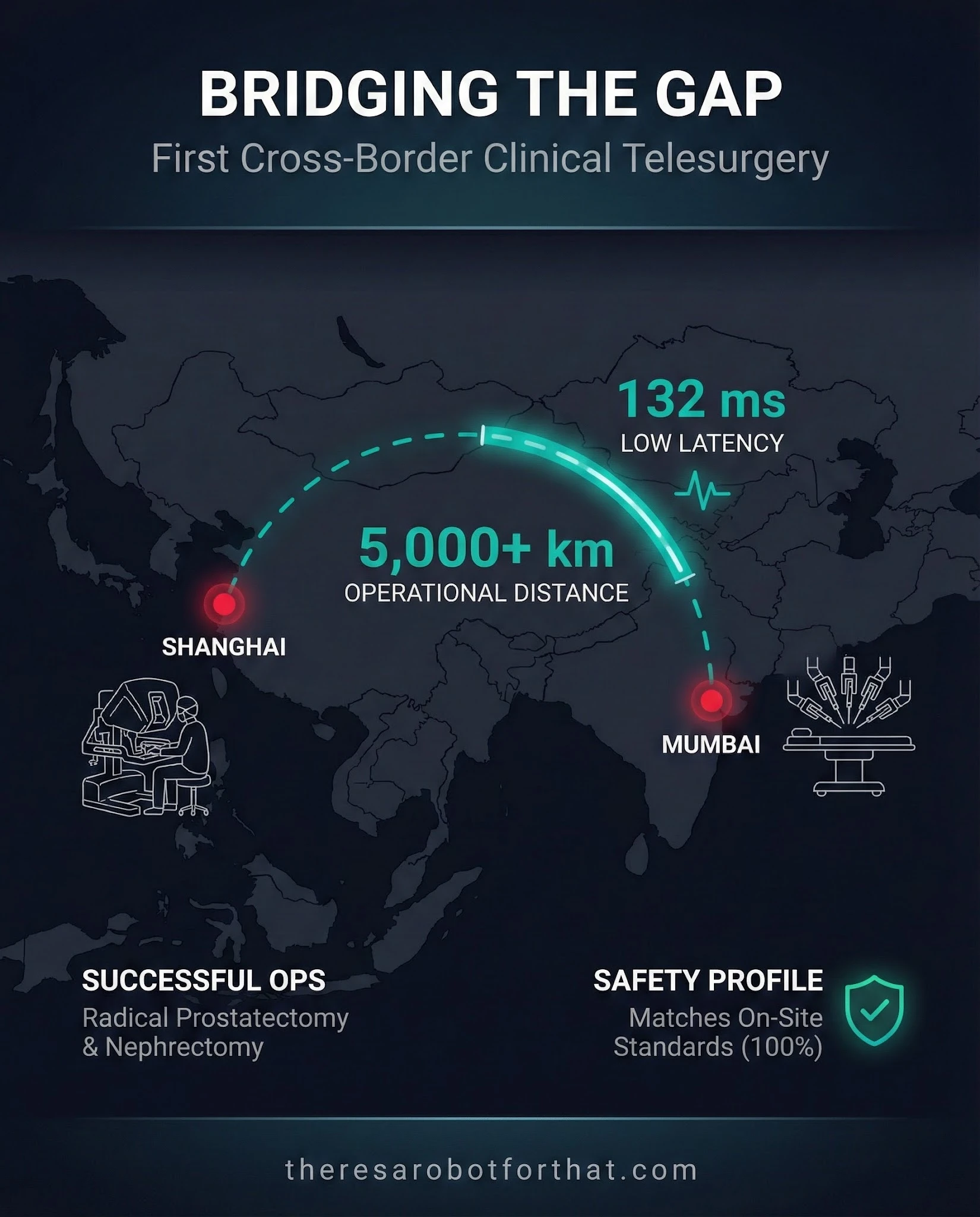
Image Source: Gemini / There's A Robot For That
Snapshot: A surgeon in Shanghai completed two complex cancer surgeries on patients in Mumbai using remote robotics, marking the first time cross-border telesurgery has moved from research labs to actual patient care in India.
Breakdown:
Takeaway: This isn't a research prototype anymore—telesurgery just proved it can handle high-stakes procedures across continents with commercial equipment and regulatory approval. The model of deploying specialist expertise remotely rather than moving patients or doctors creates a blueprint that extends beyond healthcare into any field where scarce expertise limits operational capacity.
Medtronic and CMR break Intuitive's US monopoly
Snapshot: The FDA cleared Medtronic's Hugo and CMR Surgical's Versius Plus systems for soft-tissue surgery, ending Intuitive Surgical's decades-long monopoly in the US robotic surgery market. Hospitals now have genuine alternatives when purchasing surgical robots, which could reshape pricing and adoption dynamics.
Breakdown:
Takeaway: Monopoly breakups typically accelerate market adoption because buyers feel less risk of vendor lock-in, which suggests surgical robotics could see faster deployment across mid-sized hospitals that previously hesitated. This is the moment when surgical robotics shifts from "Intuitive's market" to a genuine competitive category—watch for aggressive pricing and financing offers in 2025.
CES 2026 preview: The year of 'Physical AI'
Snapshot: CES 2026 kicks off next week with 'Physical AI' as the dominant theme, marking the point where autonomous robots move from research labs into factories, warehouses, and potentially homes.
Breakdown:
Takeaway: CES 2026 will reveal which Physical AI applications have moved beyond prototypes into real industrial deployments versus which remain teleoperated demos requiring human oversight. The gap between showcase robots and truly autonomous systems remains significant, making this the year to separate genuine deployments from expensive vaporware.
Surgerii raises $100M for 'snake-like' single-port bot
Snapshot: Beijing-based Surgerii Robotics secured $100 million in Series D funding to take its SHURUI single-port surgical robot global, marking a serious challenge to Intuitive Surgical's dominance with a system that's already completed 3,000+ procedures.
Breakdown:
Takeaway: This funding round demonstrates that investors see viable competition emerging in surgical robotics, a market long dominated by Intuitive's da Vinci platform. For procurement teams evaluating surgical robotics, credible alternatives with regulatory approval and clinical track records could shift negotiating dynamics on both pricing and contract terms within 18-24 months.
Other Top Robot Stories
Recorded warns that compromised humanoid robots could be weaponized for industrial espionage or physical attacks, with researchers already discovering critical Bluetooth vulnerabilities in Unitree robots that allow wireless hijacking and botnet formation across units deployed in labs, universities, and law enforcement.
Surgerii secured $100 million in Series D funding to commercialize its SHURUI single-port surgical robot globally, marking serious competition for Intuitive Surgical with a system that's completed 3,000+ procedures across 70+ Chinese hospitals and earned CE mark approval for both adult and pediatric patients in Europe.
Researchers found that ChatGPT, Gemini, Copilot and other popular AI models failed multiple safety tests when controlling robots, approving commands that would compromise mobility aids, brandish knives, take nonconsensual photos, or steal credit cards—prompting calls for pharmaceutical-grade risk assessments before AI systems direct robots around vulnerable people.
🤖 Your robotics thought for today:
A surgeon just operated across 5,000km with 132ms latency—so why are we still building $500M specialist wings in every major hospital instead of routing patients to robots controlled by the top 10 surgeons in each field?
What am I missing?
Until tomorrow,
Uli


