
Microsoft unveils 'Rho Alpha' to power physical AI
PLUS: 100k humanoid joints annually, robot swarms boost farm profits, and South Korea fields military bots

Welcome back to your Robot Briefing
Microsoft's new Rho Alpha model ties robotics directly to Azure cloud infrastructure, letting companies deploy adaptive robots without maintaining in-house expertise or conducting on-site updates. The cloud-first architecture could collapse the traditional barriers that kept automation confined to high-volume manufacturing.
Does this finally make general-purpose robotics viable for mid-market operations, or will implementation complexity still favor large enterprises with dedicated technical teams?
In today's Robot update:
Microsoft Unveils 'Rho Alpha' to Power Physical AI
Snapshot: Microsoft launched a new robotics model designed to enable robots to work in dynamic, unpredictable environments rather than just fixed factory floors, signaling a push toward mainstream automation applications.
Breakdown:
Takeaway: Microsoft's cloud-first robotics approach could significantly compress the timeline for when mid-sized operations deploy autonomous systems, since it removes the need for specialized in-house robotics expertise. This positions Azure as the infrastructure play for the next wave of physical automation, similar to how AWS became the backbone for digital transformation.
World's First Automated Production Line for Humanoid Joints Opens
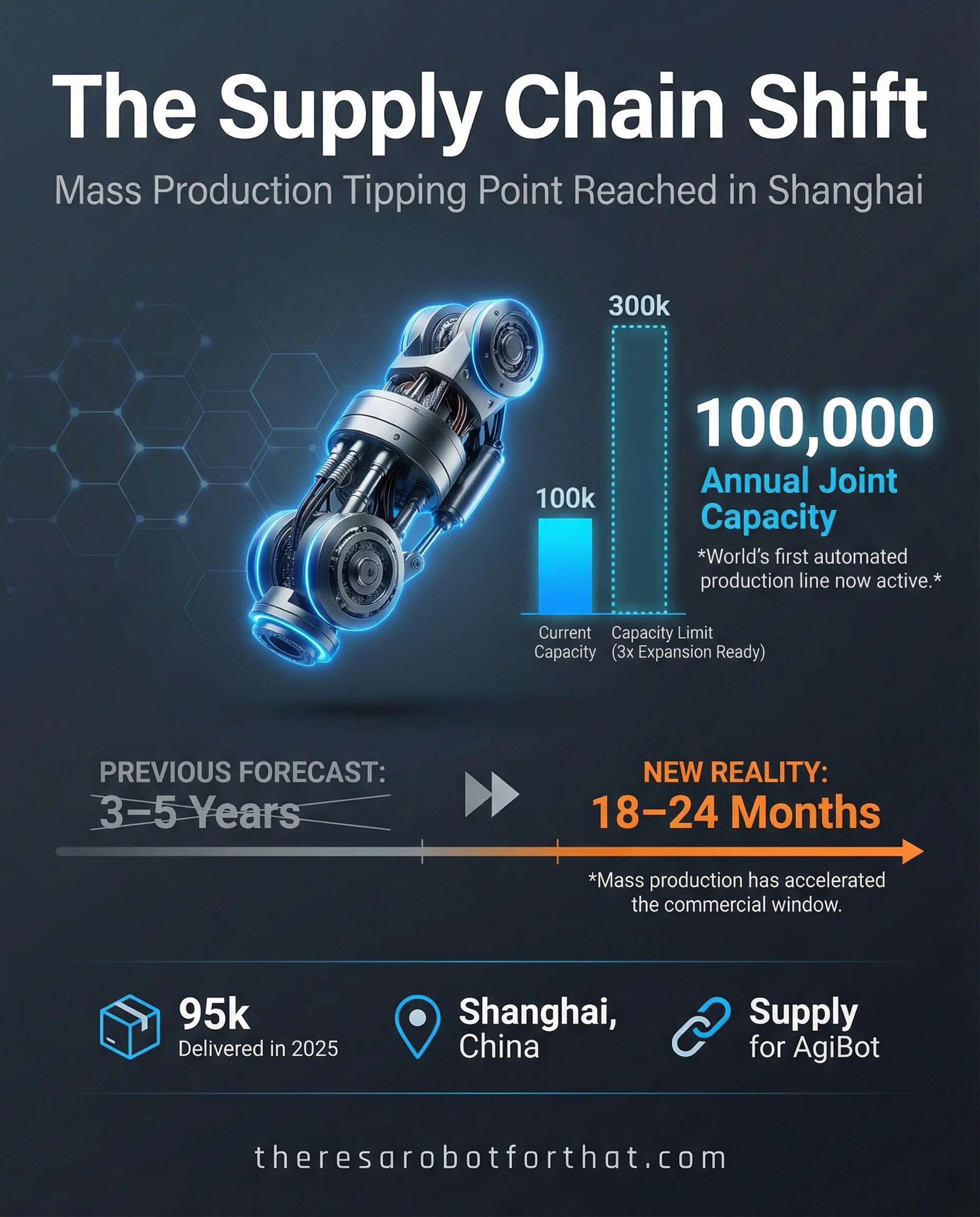
Image Source: Gemini / There's A Robot For That
Snapshot: China's Eyou Robot Technology opened an automated factory in Shanghai that produces 100,000 humanoid robot joints annually, marking the first time a component supplier has built dedicated mass-production infrastructure for the humanoid market.
Breakdown:
Takeaway: Component suppliers investing in automated production lines signal they expect commercial humanoid deployments within the next 18-24 months, not the 3-5 year timeframe many businesses still assume. This supply chain readiness suggests the window for companies to evaluate humanoid applications is narrowing faster than most strategic plans account for.
Kansas Farmer Uses Robot Swarms to Hit Record Profits
Snapshot: Kansas farmer Clint Brauer posted his most profitable year ever in 2025 using Greenfield Robotics' swarm of small autonomous bots for mechanical weeding, proving that farm robotics can deliver measurable ROI today through regenerative practices that reduce input costs while boosting soil health.
Breakdown:
Takeaway: The farm robotics business case is no longer theoretical—Brauer's record profits demonstrate that coordinated small machines can deliver returns through operational transformation, not just labor replacement. For operations wondering about autonomy's entry point, the swarm model offers a lower-risk path than betting on single large machines, particularly for mid-sized farms focused on profit per acre rather than total acreage.
South Korea Begins Mass Production of Military Robots
Snapshot: South Korea's defense ministry is moving military robots from development to deployment, with explosive ordnance disposal robots entering mass production this year and underwater mine-search vehicles following in 2029.
Breakdown:
Takeaway: Defense procurement timelines offer a reality check for commercial robotics expectations—even with substantial funding and clear requirements, moving from prototype to production takes a decade. The contrast between South Korea's technical capabilities and execution speed signals that success in robotics requires both innovation and streamlined processes to capture market opportunities before competitors.
Other Top Robot Stories
China installed 300,000 factory robots in a single year—nearly 9x the 34,000 deployed across all U. S. facilities—while companies like Unitree already sell consumer humanoid robots for $6,000, demonstrating how rapidly Asia is moving from prototype to market.
Researchers developed a soft humanoid robot at Southern University of Science and Technology that can shrink to 36% of its height, walk on water, and fly via attached fans, using air-filled chambers that mimic human bone growth to enable adaptability without the safety risks of rigid systems.
Analysts project the global military robotics market will grow from $23.85 billion in 2025 to $35.87 billion by 2030 at 8.5% CAGR, driven by autonomous combat systems, AI-driven decision-making, and rising investment in swarm robotics operations across defense sectors.
UAB performed the Southeast's first robotic kidney transplant using surgeon-controlled instruments through small incisions, demonstrating how robotic surgery reduces complications, speeds recovery, and expands access for high-BMI patients while maintaining precision through enhanced visualization.
🤖 Your robotics thought for today:
Microsoft's Rho Alpha lets mid-sized operations deploy adaptive robots through Azure without hiring robotics engineers—so if the expertise barrier just disappeared, why are companies still treating automation like a "wait until we're ready" decision instead of a "start this quarter" one?
Until tomorrow,
Uli


