
Boston Dynamics targets brownfield factories with electric Atlas
PLUS: Why humanoids 'suck', Vicarious Surgical pivots, DEEP Robotics wins CES

Welcome back to your Robot Briefing
Boston Dynamics is zeroing in on a surprisingly practical target for its electric Atlas humanoid: brownfield factories that weren't designed for robots. The company's strategy hinges on automotive sequencing—repetitive, physically demanding work that's hard to automate with fixed systems but replicable across thousands of existing facilities.
Rather than chase splashy capability demos, Boston Dynamics is solving deployment friction first: drop-in compatibility, quick task learning, and robots that redeploy when work cells change. Does this disciplined focus on real-world constraints mean humanoids will scale commercially faster than the skeptics predict?
In today's Robot update:
Boston Dynamics' New Blueprint for Factory Humanoids
Snapshot: Boston Dynamics Product Lead Aya Durbin outlined the company's commercial strategy for electric Atlas: targeting existing "brownfield" factories with automotive sequencing as the critical first application that proves humanoids can operate profitably in real-world manufacturing environments.
Breakdown:
Takeaway: Boston Dynamics is playing the long game by solving deployment friction first (brownfield compatibility, fast task learning, field serviceability) rather than chasing capability headlines. This disciplined approach signals that commercial humanoid deployments are transitioning from pilot programs to scalable operations faster than most executives expect.
Industry Insiders: Humanoid Robots 'Suck' Right Now
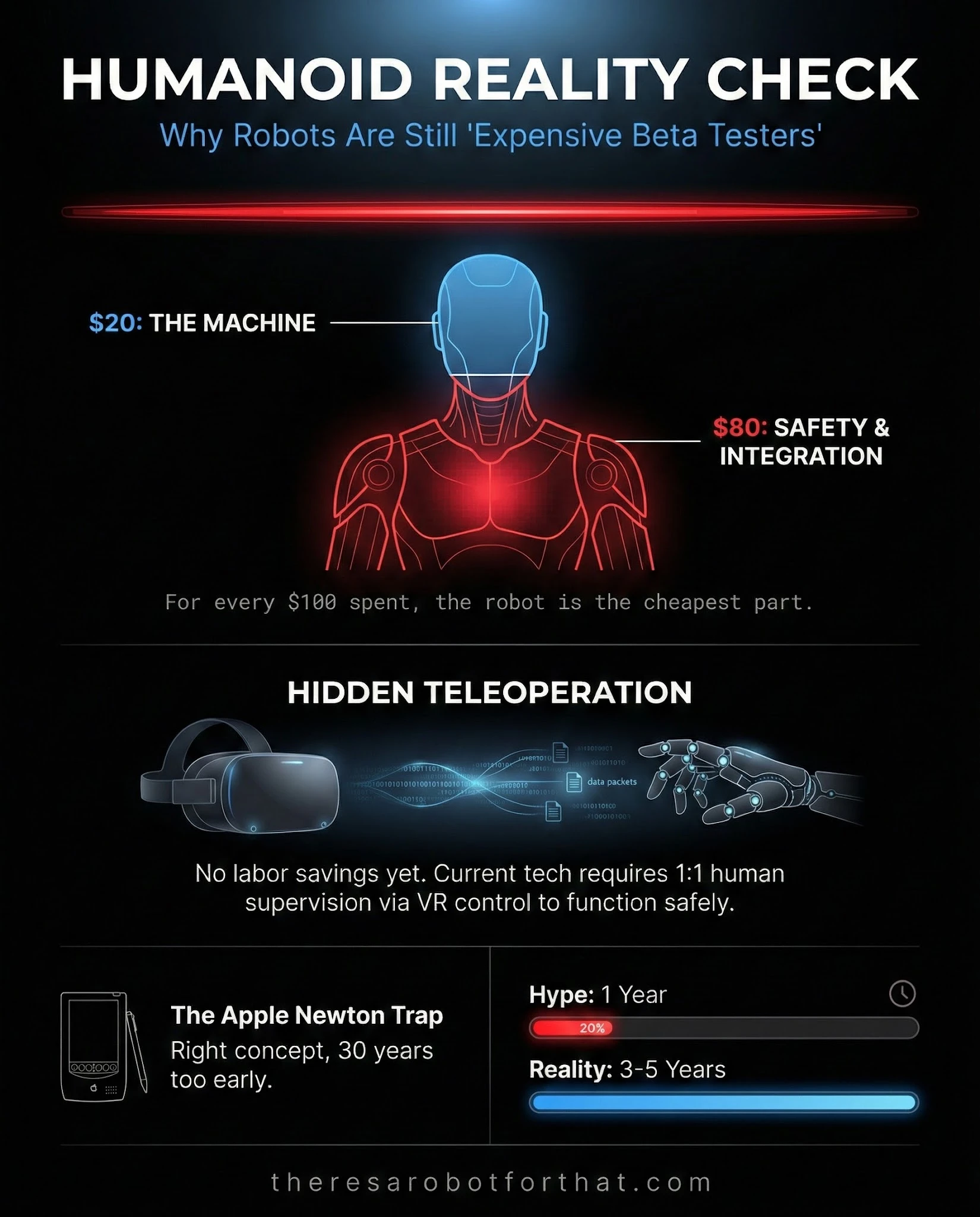
Image Source: Gemini / There's A Robot For That
Snapshot: Executives at the recent Humanoids Summit issued a stark warning: today's bipedal robots risk becoming "overpriced junk" like the Apple Newton, with the technology not yet mature enough for real-world deployment despite billions in investment flowing into the sector.
Breakdown:
Takeaway: This represents a rare moment of candor from industry insiders who typically fuel optimism to attract investment, signaling that business leaders should plan for a 3-5 year timeline before humanoid robots deliver practical ROI rather than the "next year" promises from companies like Tesla. The gap between demo videos and deployable products remains wide enough that early adopters risk becoming expensive beta testers rather than competitive advantage-seekers.
Vicarious Surgical Overhauls Engineering to Burn Less Cash
Snapshot: Vicarious Surgical announced a strategic partnership to outsource software execution, shifting to a hybrid engineering model aimed at extending its runway and accelerating clinical readiness.
Breakdown:
Takeaway: This signals that even well-funded surgical robotics ventures are tightening operations before commercialization, choosing strategic outsourcing over headcount expansion. For companies evaluating robotics investments, it highlights that the path from prototype to clinical approval remains capital-intensive and timeline-uncertain, even for established players.
DEEP Robotics Takes Home CES Innovation Award
Snapshot: DEEP Robotics' Lynx M20 Pro wheeled-legged robot won the CES 2026 Innovation Award in Robotics, signaling that hybrid mobility platforms are gaining mainstream industry recognition ahead of the January show.
Breakdown:
Takeaway: When wheeled-legged robots start winning mainstream technology awards, it signals the category is moving from research labs to commercial viability. Companies dealing with mixed indoor-outdoor environments or facilities with infrastructure obstacles should add this mobility approach to their 2026 evaluation shortlist.
🤖 Your robotics thought for today:
Boston Dynamics built Atlas for brownfield factories so it doesn't need custom infrastructure, but if redeploying robots is easier than redeploying workers, what's stopping your CFO from designing the next facility around robots instead of people?
What am I missing?
Until tomorrow,
Uli


