
Boston Dynamics’ Atlas enters Hyundai factories in 2028
PLUS: Johns Hopkins’ eye surgery bot + GITAI changes its own tire + AI tomato harvester

Welcome back to your Robot Briefing
The humanoid robot era just got its first real deadline: Boston Dynamics will deploy Atlas at a Hyundai factory by 2028, starting with parts sequencing before graduating to complex assembly work. It's the first time a major robotics company has committed to a specific year and application, replacing vague promises with a concrete timeline.
The 2028 target also reveals how far we still have to go — even industry leaders see general-purpose humanoids as 2+ years out. For manufacturers evaluating automation investments today, does this timeline justify waiting, or should they be planning integration strategies now?
In today's Robot update:
Inside Boston Dynamics' plan for Atlas
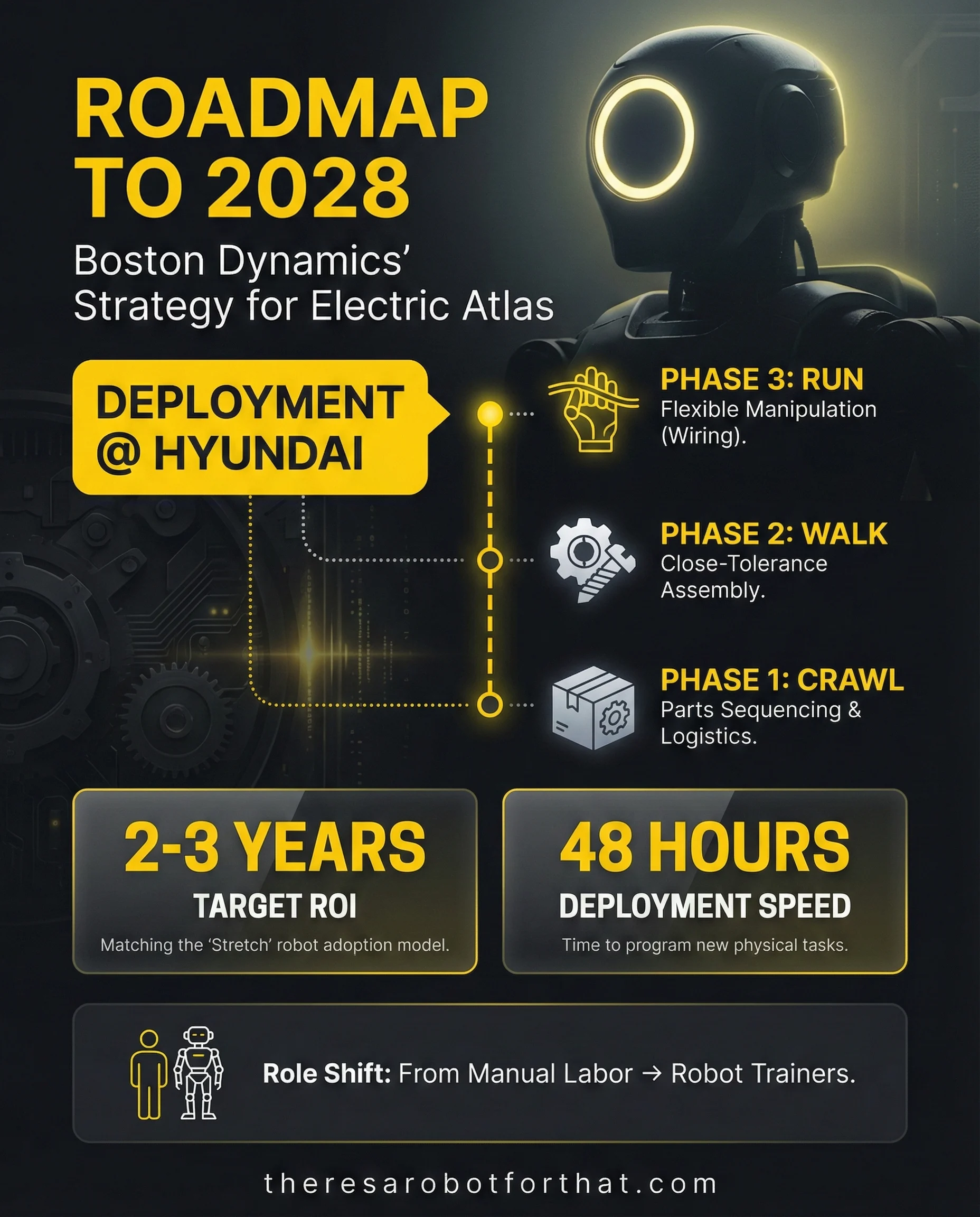
Image Source: Gemini / There's A Robot For That
Snapshot: Boston Dynamics CEO Robert Playter confirmed that the company's electric Atlas humanoid will begin performing parts sequencing tasks at a Hyundai factory by 2028, marking the first concrete deployment timeline for a commercial humanoid robot from a major robotics manufacturer.
Breakdown:
Takeaway: This is the first time a major robotics company has committed to a specific year and application for humanoid deployment, giving manufacturers a tangible timeline to plan around rather than vague "coming soon" promises. The 2028 date and parts sequencing starting point also signal that even well-funded robotics leaders see general-purpose humanoids as still 2+ years away from production floors, tempering expectations for near-term adoption.
Robots perform surgery on the head of a pin
Snapshot: Johns Hopkins researchers developed a robotic system that can insert a hair-thin needle into blocked retinal veins with 90% success—a procedure so delicate that human hands typically can't do it without damaging the eye.
Breakdown:
Takeaway: This represents a clear example of robotics enabling previously impossible medical procedures rather than just making existing ones faster. The path from 90% success in ex vivo pig eyes to routine clinical use will take years, but it shows how combining micron-level precision robotics with AI vision can unlock new treatment options.
GITAI's robot changes its own tire
Snapshot: Space robotics startup GITAI demonstrated a robot that autonomously replaces its own tire using an inchworm arm mechanism, showcasing self-maintenance capabilities critical for long-duration remote missions.
Breakdown:
Takeaway: This demonstration signals that field robotics is advancing toward genuine operational autonomy in extreme environments, though these capabilities remain focused on high-stakes applications like space and remote infrastructure. The techniques being proven in these harsh conditions will eventually filter down to industrial applications where reducing maintenance overhead drives ROI.
This harvesting robot knows when *not* to pick
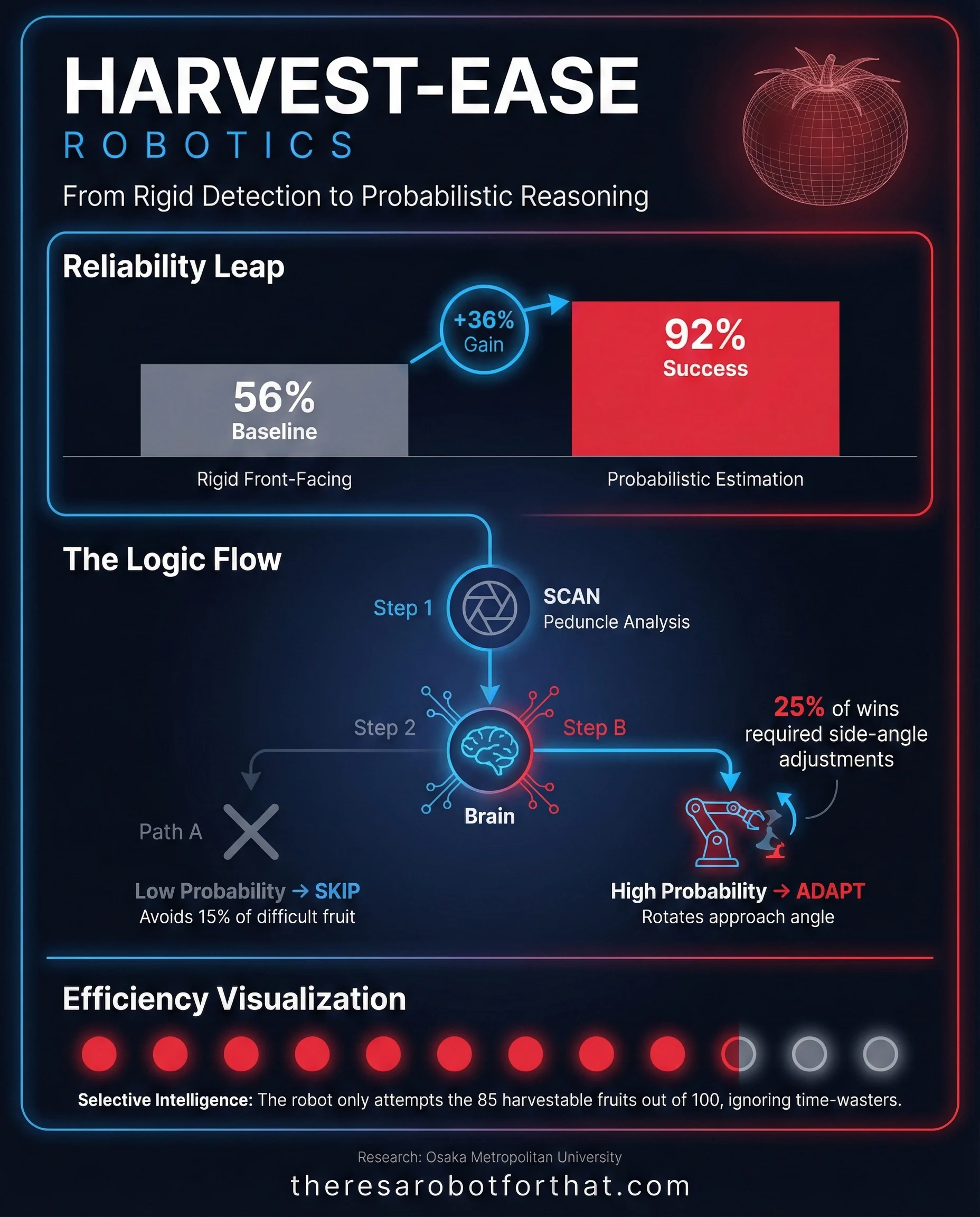
Image Source: Gemini / There's A Robot For That
Snapshot: Scientists at Osaka Metropolitan University created a tomato-harvesting robot that uses probabilistic reasoning to estimate 'harvest-ease' before attempting a pick, achieving an 81% success rate.
Breakdown:
Takeaway: This probabilistic approach addresses a critical barrier to agricultural robot deployment: reliability. By teaching robots to assess task difficulty before acting, rather than attempting every pick, operators gain predictable performance that's essential for justifying automation investments in labor-intensive harvesting operations.
Other Top Robot Stories
Caterpillar deployed NVIDIA's AI Factory, Omniverse, and edge AI across its heavy equipment operations, from digital twin simulations on factory floors to in-cab AI copilots on job sites—showing that construction equipment makers view physical AI as a near-term competitive differentiator rather than speculative R&D.
DEEP Robotics demonstrated coordinated multi-robot firefighting operations with quadruped robots operating under unified command in complex, dynamic emergency scenarios, signaling that autonomous systems are advancing toward genuine reliability in unpredictable environments where human response teams currently dominate.
🤖 Your robotics thought for today:
Boston Dynamics just set the bar: 2028 for parts sequencing, 2030 for complex assembly. Industry leaders are thinking in five-year cycles. Mid-sized factories rejecting 2025 pilots aren't behind schedule—they're just not reading the same roadmap. The gap between expectation and reality is widening fast.
Until tomorrow,
Uli


